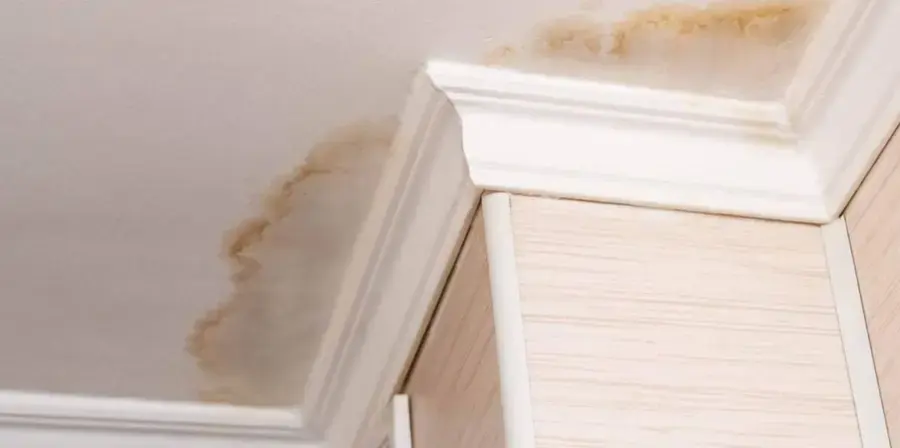
About 26 percent of La Vergne households rent, and many of them live in apartment and condo buildings where a leak in one unit can reach the neighbors below.
Key takeaways
- A leak from the unit above can come from a supply connection, a drain, a washer, a dishwasher or a failed fixture.
- Water spreads through the ceiling cavity and down walls, so the wet area is usually bigger than the stain.
- Tenants and owners should photograph the damage, notify the manager or association and keep a written record.
- Sagging drywall can hold a lot of water and should be opened safely, not poked or punctured by hand.
- Drying continues until moisture readings match a dry reference, even if the ceiling looks fine.
Why multifamily leaks reach the neighbors
La Vergne is mostly large single family subdivisions plus many apartment complexes and condos. The 2020 Census counted 12,472 households, and the owner occupied rate is 74.0 percent, so roughly a quarter of homes are rentals.
Named multifamily properties in town include Cedar Ridge Apartments, Kingsridge Apartments, Madison Square Apartments, Court Side Condominiums and The Villas of Central Park. The median year built is about 2003 for apartments.
In any multi unit building, water from one unit has few places to go. It runs down through the floor and ceiling assembly, along walls and into the units below and beside it.
- Floors and ceilings are shared, so water crosses units easily.
- A leak can start in a spot the neighbor never sees.
- The unit that shows the damage is often not the unit that caused it.
Common sources of a leak from above
Appliances
A washer hose, a dishwasher supply connection, an ice maker connection or a drain fitting can fail while no one is home. A small drip becomes a spreading puddle once the water finds the floor edge.
Bathrooms and kitchens
A toilet supply, a tub overflow, a sink drain or a shower pan can leak slowly for days before a stain shows below. A slow bathroom leak soaks the subfloor first, then the ceiling underneath.
Supply and drain pipes
A failed fitting inside a wall or floor cavity can release water that follows framing to the unit below. The visible stain may be far from the source.
The first steps in the units above and below
First steps for the household below
Call the building manager or association right away, because they can reach the unit above and shut off the water. Do not wait for the stain to grow.
If water is dripping through a light fixture or fan, turn off power to that room at the breaker when it is safe to reach. Move furniture and electronics away from the wet area.
- Photograph the stain, the drip and the surrounding walls before anything is moved.
- Put a bucket under steady drips and move rugs, books and electronics.
- Write down the date, time and who was told.
- Do not poke a swollen ceiling; trapped water can fall all at once.
- Call the restoration team to assess how far the water traveled.
What the leaking unit does
The household above is usually the first to hear about the leak, and the fastest fix is to close the supply valve at the appliance or fixture. Most washers, toilets and sinks have a small shutoff valve right at the connection.
If no one is home upstairs, the manager or association may need to enter to shut the water off. That is why a quick call matters more than a perfect description of the problem.
After the water is off, both households benefit from a clear record. The unit above may need to dry a floor and subfloor, and the unit below may need to dry a ceiling and walls.
- The unit above closes the valve, mops up and photographs the source.
- The unit below photographs the stain and protects belongings.
- Both notify the manager or association in writing.
- Both leave wet materials in place until they are documented.
Sagging ceilings and trapped water
Drywall can hold a surprising amount of water. A bubble or sag means water has pooled behind the surface, and a ceiling that looks only a little stained can still hold a lot.
The restoration team opens a sagging ceiling in a controlled way, lets the water drain into containers and removes wet material. That prevents a sudden collapse and avoids spreading water across the room.
Insulation above the ceiling may be wet too, and wet insulation is removed because it holds water against framing.
Light fixtures, smoke detectors and fans in a wet ceiling are left alone until the power is off and the area has been checked.
Documentation, landlords and insurance
In rental buildings the lease and the property manager decide who pays for what, and an owner's association policy may cover some of the building. Renters insurance often covers belongings, not the building.
The restoration team documents the loss with photographs, moisture readings and a written scope, and those records help whoever files the claim. The team does not decide who is responsible; it records what the water did.
- Keep copies of messages to the manager or association.
- List damaged belongings with brand and approximate age.
- Ask for moisture readings and photos at the end of the dry out.
- Keep receipts for any hotel stay or temporary repair.
How the dry out works
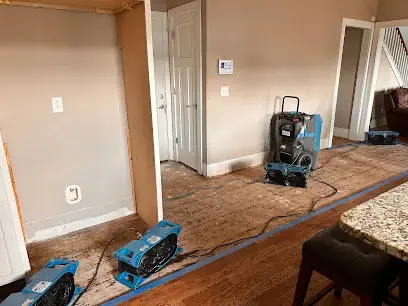
Wet drywall and insulation are removed where meters show water. Air movers push dry air across the wet area, dehumidifiers pull moisture from the air, and equipment runs until readings return to normal.
The restoration team works in phases when a building is occupied, so that dry units stay dry and neighbors can keep living there. That can mean drying one unit at a time and containing dust and noise.
- Containers catch water from the ceiling.
- Wet drywall, insulation and pad come out.
- Equipment is placed to dry the cavity, not just the surface.
- Readings decide when the equipment leaves.
Related services in La Vergne
A leak from above usually involves ceiling leak water damage and the cause may be an appliance leak in the unit overhead.
The restoration team also serves La Vergne condo owners and apartment tenants with the same steps for water damage in any room, and the main ceiling leak water damage page covers the process in Smyrna.
Questions
Who is responsible for a leak from the unit above?
That depends on the cause, the lease and any association rules. The restoration team documents the damage and does not decide who pays.
Should a renter dry the ceiling alone with fans?
Fans alone rarely dry a wet ceiling cavity. Moisture readings show whether water is still trapped above the drywall.
Is a bulging ceiling dangerous?
It can be. A swollen ceiling may hold water that drops suddenly, so it is opened in a controlled way.
What records help with a claim?
Photographs, dates, messages to the manager, a list of damaged items and the moisture readings from the dry out.
Can neighbors keep living in the building during drying?
Often yes. The team contains the work area and dries in phases so unaffected units stay usable.