Storm and Flash Flood Cleanup in Smyrna, TN
Water that comes in from outside carries soil, fuel and sewage. The flood crew treats it as Category 3, removes what it touched, cleans with antimicrobial and dries the structure to a verified reading.
(888) 849-5796Smyrna floodwater out now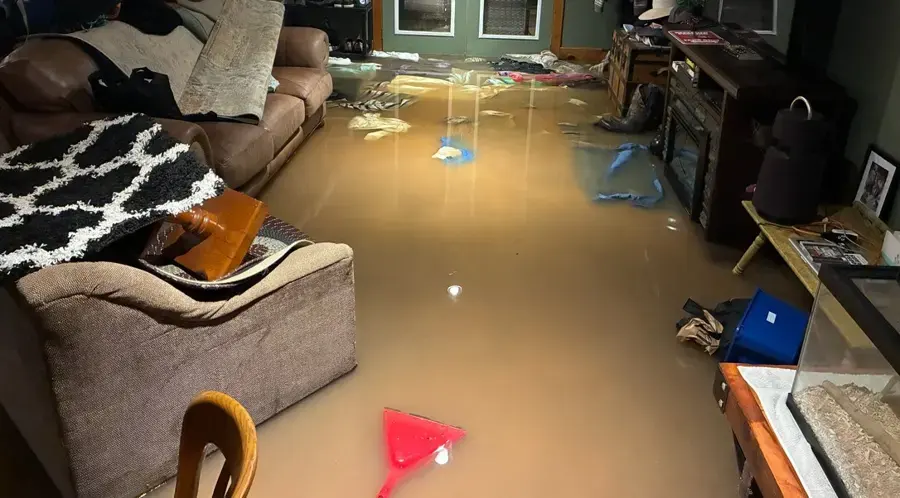
Smyrna sits in the Stewarts Creek watershed, where small creeks rise quickly in a hard rain and drop again within hours. That speed is the danger: water gets into garages, crawl spaces and low rooms before anyone can move things, then leaves mud and contamination behind.
First steps for storm and flash flood cleanup in Smyrna
- 1
Stay out of floodwater
Moving or deep water and live outlets are the real dangers; wait until it is safe.
- 2
Kill the power safely
Only from a dry panel; otherwise wait for the utility or an electrician.
- 3
Photograph the water line
Capture the height of the water on walls before cleanup starts.
- 4
Do not run the HVAC
A flooded air handler or ductwork spreads contamination, so call first.
What does storm and flash flood cleanup cost in Smyrna, TN?
In Smyrna, TN, storm and flood cleanup typically runs $3,000 to $25,000, depending on the depth of the water, how many rooms it reached, how much material has to come out and how long it sat.
Garage or one room
$3,000 to $6,000
- Mud and debris out
- Antimicrobial cleaning
- Drying equipment
Several rooms or crawl space
$6,000 to $14,000
- Flood cuts and removal
- HEPA air scrubbing
- Daily readings
Whole lower level
$14,000 to $25,000
- Category 3 protocol
- Extended drying
- Full claim file
Ranges are typical, not a quote: category of water, square footage, material class and how fast drying started move the number most. Run the Smyrna water damage cost calculator for a closer range.
How storm and flash flood cleanup is handled in Smyrna
The tech who does the walkthrough maps moisture before any equipment goes down, so the drying plan matches what is actually wet. Equipment stays until the readings say dry, not until it looks dry.
- 01
Safety and scope
The response team checks power, structure and the water line before work starts.
- 02
Remove and clean
Mud, wet porous materials and debris come out; surfaces get antimicrobial.
- 03
Dry the structure
Air movers and LGR dehumidifiers dry framing, subfloor and wall cavities.
- 04
Verify and document
Daily readings and photos build the claim file until the drying goal is met.
Why floodwater is handled differently
Rising surface water is Category 3 the moment it enters a building, because it picks up soil, lawn chemicals, fuel and sewage on the way. That changes the job. Porous materials it touched, carpet, pad, drywall and insulation, are removed and bagged rather than dried. Hard surfaces are cleaned and treated with an EPA-registered antimicrobial before drying begins.
- Protective gear and containment on every flood job.
- HEPA air scrubbers while contaminated materials come out.
- Flood cuts on drywall above the water line so wall cavities can dry.
The May 2010 lesson
The May 1 to 2, 2010 flood dropped record rain across Middle Tennessee and sent creeks out of their banks across Rutherford County. Many homes that flooded were outside any mapped flood zone. The FEMA flood map pages show where Smyrna's mapped flood zones are, and Ready.gov covers flood safety before and after the water.
After the water drops
Mud and debris come out first, then extraction, removal and cleaning, then drying with air movers and LGR dehumidifiers sized to each room. Daily readings track progress until materials reach the drying goal. Water under the house is covered on the crawl space water damage page, and contaminated drains on sewage backup cleanup.
Storm and flash flood cleanup across Smyrna and Rutherford County
The Smyrna restoration crew covers ZIP 37167, from Downtown Smyrna and Front Street out along Lowry Street, Sam Ridley Parkway, Nissan Drive and Almaville Road to the Stewarts Creek neighborhoods.
Nearby coverage reaches La Vergne, Murfreesboro, Nolensville, Brentwood, Mount Juliet.
Related water damage services in Smyrna
Storm and Flash Flood Cleanup questions in Smyrna, TN
Can flooded carpet be cleaned and kept?
No. Carpet and pad that touched floodwater are Category 3 and are removed. Hard flooring may be cleaned and dried if it is sound.
How high do flood cuts go?
Usually a foot or more above the highest wet reading on the wall, so the cavity and insulation can be opened and dried.
Does homeowners insurance cover flood damage?
Standard homeowners policies usually exclude rising surface water, which falls under flood insurance. Coverage depends on your policy, so check with your own insurer.
Is it safe to stay in the house?
Not in flooded rooms with wet electrical or contamination. Air quality improves once wet materials are removed and the space is contained and scrubbed.
How long does flood drying take?
Usually four to seven days after removal and cleaning, longer for slabs, hardwood and deep water.
What about a flooded car or garage?
The garage slab and walls are dried like any room; stored items that soaked up floodwater are usually discarded.
Creek water in your Smyrna home? Get it cleaned out.
Floodwater keeps soaking drywall, insulation and framing until it is removed. The flood crew contains, removes and dries.