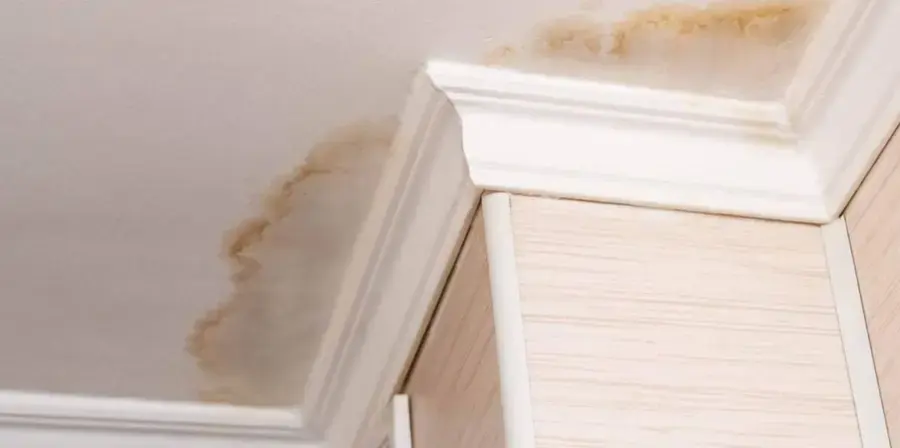
A brown ring on the ceiling of a newer home raises one question right away: is the water coming from the roof, or from a pipe upstairs?
Key takeaways
- A roof leak usually shows up during or after rain, while a pipe leak shows up whenever the fixture is used.
- The median Nolensville home was built around 2012, so many roofs and fittings are roughly a decade old.
- About 93.6 percent of Nolensville housing units are owner occupied, so the repair and the claim usually sit with one owner.
- A stain, a drywall bubble and a moisture reading each tell a different part of the story.
- Wet drywall and insulation above a ceiling should be checked before the stain is painted over.
Why ceiling stains show up in newer Nolensville homes
Nolensville has kept growing, with developments such as Bent Creek, Winterset Woods, Burkitt Place, Silver Stream, Ballenger Farms, Sunset Farms and Summerlyn. The median home was built around 2012.
A newer home is not a leak free home. Flashing, sealant, vent boots and supply fittings can fail long before the structure itself wears out.
Because about 93.6 percent of housing units in town are owner occupied, a ceiling stain is almost always the owner's own roof or the owner's own upstairs plumbing.
Roof leak or pipe leak: telling them apart
The timing of the stain is the best clue. The next step is where it sits on the ceiling.
Looking at the stain pattern, the room above it and the weather on the day it appeared usually settles the question.
Signs that point to the roof
Rain that gets past shingles or flashing runs along the roof deck and rafters before it drips, so the stain can sit well away from the actual opening.
- The stain appears or grows during or after rain, then slows when it dries.
- It sits near an exterior wall, a chimney, a vent pipe or a roof valley.
- Several rooms on the top floor show stains after the same storm.
- The attic side of the ceiling shows wet insulation or dark roof decking.
Signs that point to a pipe
A plumbing leak ignores the weather. It follows the use of a bathroom, a washer or a kitchen.
- The stain grows when a shower, tub, toilet or washer is used upstairs.
- It sits under a bathroom, laundry room or kitchen.
- The stain appears on a dry, sunny day.
- The water meter keeps moving when every fixture in the house is off.
What a stain, a bubble and a reading each mean
A ceiling gives three different warnings, and they are not equal. A stain means water has already passed through.
A bubble means water is pooled behind the paint right now.
A moisture reading is the only one of the three that measures how far the water has spread.
- A stain shows that water reached the drywall at some point.
- A sagging drywall bubble means a pocket of water is sitting above the surface and can fall.
- A moisture reading shows how wet the drywall, the insulation and the framing above it are.
- A stain that has dried can still hide wet insulation above it.
What to do while the ceiling is wet
Protect people first and the structure second. A ceiling holding water can come down without warning.
Safe first steps
Keep people and pets out from under a sagging spot.
Move furniture and electronics aside and set a bucket under any drip.
A bucket and a towel buy time. They do not fix the source.
- Turn off the water to the upstairs fixture if a pipe is the suspect.
- Turn off power to the area if water is near a light fixture or outlet.
- Photograph the stain and the damage before anything is moved.
- Do not paint over the stain until the area has been checked.
Relieving a bubble
A small hole at the lowest point of a bubble can let trapped water drain into a bucket. That is better than letting the whole panel fall.
A restoration team does this deliberately and then opens the area to check what is behind it.
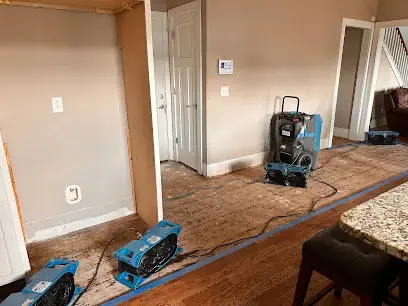
How the ceiling and the space above it are dried
The ceiling leak water damage team locates the source, maps the wet area with a moisture meter and removes drywall and insulation that cannot dry.
Air movers and dehumidifiers then work on what remains, and readings are repeated until framing and the remaining drywall match a dry reference.
- The wet area is mapped before any cutting starts.
- Wet insulation is removed because it holds water against the framing.
- Opened cavities let air reach the joists and the back of the drywall.
- Readings are logged so the insurance file shows what was wet and when it dried.
Why newer roofs and fittings still fail
Age is only one cause. Workmanship, a loose nail, a cracked vent boot or a joint that was never fully sealed can let water in during the first decade.
Many Nolensville roofs are roughly a decade old, which is when sealant starts to dry out and flashing begins to move.
- Flashing around chimneys, walls and skylights is the most common opening.
- Vent pipe boots crack as the rubber ages in sun and weather.
- A cut or loose shingle can leak only when wind pushes rain sideways.
- Supply fittings behind a tub or a washer can weep for months before a stain appears.
When the roof is the source
If the stain points to the roof, the opening has to be sealed before the interior can be dried for good. Otherwise the next rain starts the damage again.
A roof leak water damage call covers the interior side: the wet insulation, the ceiling and the framing that took the water.
A roofer handles the shingles, flashing and vent boots. The two jobs work best side by side, and temporary covering keeps more rain out in between.
Why a quick repaint is a mistake
Paint over a wet ceiling hides the stain and traps the moisture. The drywall keeps softening, and the insulation above stays wet.
Checking first costs little. Covering it up can mean a larger repair later, and it can weaken a claim.
Nolensville homeowners can find the town's coverage and nearby service details on the Nolensville water damage page.
Questions
How can a homeowner tell if a ceiling stain is from the roof or a pipe?
Timing is the clue. A roof leak follows rain, while a pipe leak follows the use of a bathroom, laundry or kitchen above. A water meter that moves with everything off also points to a pipe.
Are ceiling leaks common in newer homes?
Yes. The median Nolensville home was built around 2012, and flashing, sealant, vent boots and fittings can fail well before the structure wears out.
What does a bubble in the ceiling mean?
It means water is pooled behind the paint or drywall. The ceiling can fall, so people should stay clear until the water is drained and the area is checked.
Can a dry stain still mean trouble?
Yes. A stain can dry on the surface while the insulation and framing above it stay wet. A moisture reading shows what the eye cannot.
Does the roof or the pipe need to be fixed first?
The source comes first, because drying a ceiling that keeps getting wet only repeats the problem. Once the water stops, the wet material is removed and dried.