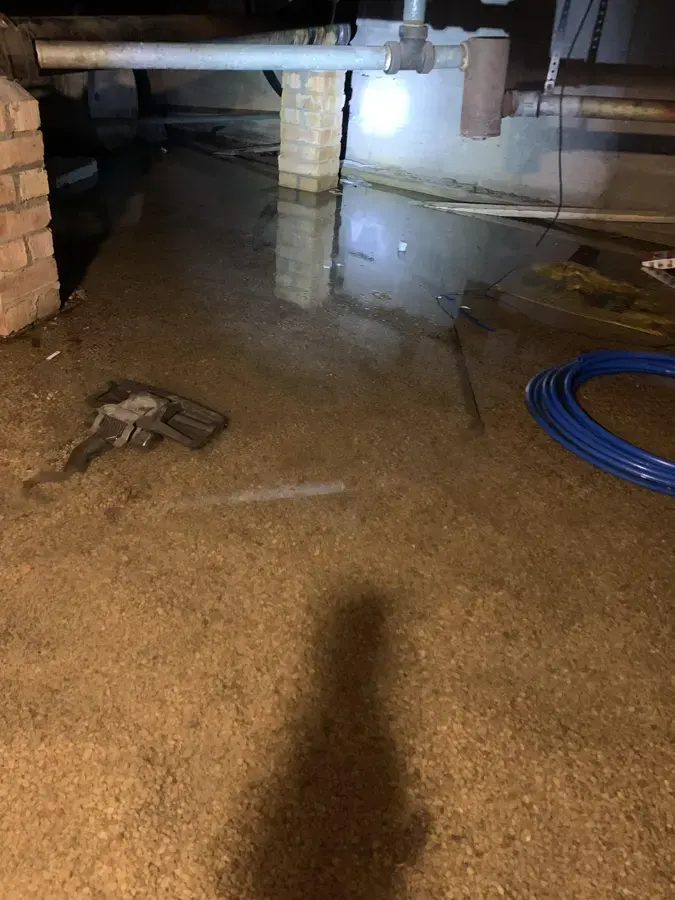
Most homeowners never look under their house until a floor feels soft, a cold spot appears or a musty smell rises through the vents.
Key takeaways
- Newer Smyrna subdivisions are largely slab on grade or sit on a vented crawl space, so water under the house is a real local risk.
- A supply pipe leak, an air conditioning duct leak or rain through the vents can all wet the vapor barrier and joists.
- Rutherford County has limestone bedrock and thin clay soils, so ground water does not always drain away on its own.
- The usual order is pump out, remove the wet barrier and insulation, then dry the joists and subfloor.
- A crawl space should be checked after heavy rain, a hard freeze or any unexplained rise in the water bill.
Why crawl spaces matter in Smyrna
Smyrna grew with the Nissan plant and the I-24 corridor, and most of its homes date from the 1990s on. Newer subdivisions are largely slab on grade or built over a vented crawl space, and few have basements.
A crawl space is a hidden room. It holds supply pipes, drain pipes and air conditioning ducts, and almost no one checks it.
Three ways water gets under the house
Water under a house comes from above, from the side or from the system inside the space itself.
Each of the three sources leaves a different pattern, which helps a restoration team find where the water started.
A leaking supply pipe
A pinhole or a failed fitting on a supply pipe can drip for weeks. The water falls onto the vapor barrier, collects in low spots and soaks the soil under it.
The first sign is often a bill that climbs for no reason.
An air conditioning duct leak
Cold ducts sweat in humid weather. A loose joint or a torn duct can drip condensate onto the barrier and the joists below the floor.
Smyrna summers are humid, so the problem tends to show up between spring and fall.
Rain through the vents
Late winter and spring bring heavy rain, and thunderstorms hit in spring and summer. Water can run across the yard, in through the vents or under the foundation edge and settle on the barrier.
Stewarts Creek and the Stewarts Creek arm of J. Percy Priest Lake on the Stones River remind residents that this area carries water.
What wet barrier and joists look like
A vapor barrier is a plastic sheet laid over the soil to keep ground moisture out of the air under the house. It does its job only while it stays intact and the space stays dry.
When water gets in, the sheet can trap it against the soil instead of letting it drain. Insulation and wood above it start absorbing the moisture.
- Standing water or damp soil visible under the barrier.
- Sagging or wet insulation between the joists.
- Dark or darkened wood on joists and the subfloor above.
- A musty smell rising through floor registers.
- Soft spots, cupping or buckling in the flooring above.
Why the soil in Rutherford County matters
Rutherford County sits on limestone bedrock with thin clay soils. Thin soil over rock does not always carry water away, so a wet crawl space can stay wet.
Water that cannot soak down tends to sit. That is why pump out matters even when the source seems small.
Why a wet crawl space affects the rooms above
A crawl space is not sealed off from the house. Air moves up through gaps around pipes, ducts and floor registers, so damp air below becomes damp air inside.
Joists and the subfloor sit right above the barrier and soak up moisture from the air, even without a visible puddle.
- Floors can feel cold, soft or springy over a wet area.
- Hardwood and laminate can cup or buckle when the subfloor stays damp.
- A musty smell inside the home often traces back to the space below.
- Insulation that gets wet loses its value and holds water against the framing.
How a crawl space is cleared and dried
The work follows a fixed order. The source is stopped first, because drying a space that keeps getting wet does not hold.
Pump out and removal
The water extraction team pumps standing water out of the space. Wet insulation and the soaked vapor barrier are then pulled out so they cannot hold moisture against the structure.
Drying a space with a live leak only delays the damage, so the source is stopped first.
- Standing water is pumped out.
- A damaged or wet vapor barrier is removed.
- Soaked insulation is taken out of the joist bays.
- Debris and loose material are cleared so air can move.
Drying the joists and subfloor
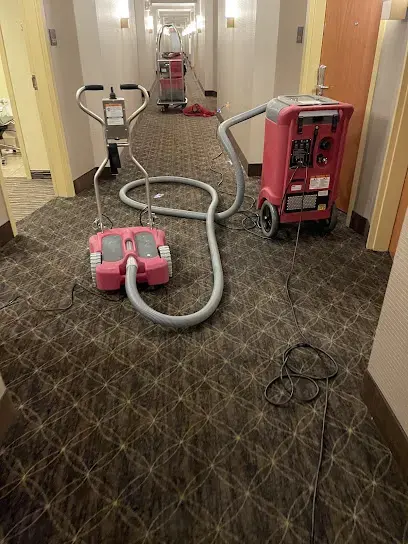
Air movers and dehumidifiers go to work on the framing. Readings are taken on joists, the subfloor and the soil, and they are repeated until the wood matches a dry reference.
The crawl space water damage team keeps a log of those readings for the file.
What a homeowner can do first
A little checking early can prevent a large repair later. These steps are safe for most homes.
- Check the water meter with every fixture off and see if it moves.
- Look through the access door with a flashlight after heavy rain.
- Do not enter a crawl space with standing water near wiring or equipment.
- Photograph any water, wet insulation or damaged barrier.
- Turn off the water to the house if a supply pipe is the suspect.
A neighbor with the same problem
Homeowners in nearby La Vergne can read how the same water problems are handled on the La Vergne water damage page.
The core steps stay the same: stop the source, pump out, remove wet material and dry the framing to a measured goal.
Questions
How can a homeowner tell if a crawl space has water?
Common signs are a musty smell through the floor registers, soft or cupped flooring, a water bill that climbs for no reason and visible water or wet insulation under the house.
What is the vapor barrier for?
It is a plastic sheet over the soil that keeps ground moisture out of the air under the house. It stops working well once water gets underneath or on top of it.
Can an air conditioning duct really wet a crawl space?
Yes. Cold ducts sweat in humid weather, and a loose joint or a tear can drip onto the barrier and joists.
Why does water sit under Smyrna houses?
Rutherford County has limestone bedrock and thin clay soils, so water that gets under a house does not always drain away.
What is the order of work for a wet crawl space?
Stop the source, pump out the water, remove the wet barrier and insulation, then dry the joists and subfloor until readings match a dry reference.