Most homes in Smyrna date from the 1990s on, and many of the newer subdivisions sit on a concrete slab, which means a supply pipe can leak for weeks under the floor before anything shows.
Key takeaways
- A warm spot on the floor, the sound of running water with every fixture off, or a meter that keeps turning are the three classic slab leak signs.
- A simple meter test, with every tap and appliance off, shows whether water is leaving the house somewhere unseen.
- Thermal imaging and meters point to the leak, so floors are lifted only where readings say the water is.
- Fixing the pipe is a plumber's job; drying the slab, subfloor and flooring is the restoration job, and both matter.
- A slab that looks dry on top can still hold water below, so readings against a dry reference decide when drying is done.
Why slab leaks stay hidden in Smyrna homes
Smyrna grew with the Nissan plant and the I-24 corridor, and most of its houses were built from the 1990s on. Newer subdivisions in town are largely slab on grade or sit on a vented crawl space, and few have basements.
On a slab, supply pipes run under or through the concrete. When one develops a pinhole or a fitting fails, the water has nowhere obvious to go.
It can rise into the flooring, travel along the underside of the slab, or soak into the ground below the house. Rutherford County sits on limestone bedrock with thin clay soils, so wet ground under a house does not always drain away on its own.
- The leak is out of sight, so the first sign is often the bill, not a puddle.
- Water can spread sideways under the slab before it shows up in one room.
- A slow leak can dampen baseboards, carpet pad and the bottom of drywall for a long time.
Warning signs a homeowner can check
A warm or damp spot on the floor
A leaking hot water pipe can warm one patch of tile or hardwood, and bare feet often notice it before anything else does.
Damp carpet, a floor that feels soft, or flooring that lifts at the seams near an interior wall are also worth a closer look.
Sound, bills and water pressure
A faint hiss or running sound when every tap and appliance is off suggests water is moving through a pipe somewhere.
A water bill that climbs with no change in habits, or pressure that seems weaker than it used to be, points the same way.
The meter test
Turn off every tap, the ice maker and any appliance that uses water, then look at the meter dial or leak indicator.
If the dial keeps moving, water is leaving the pipes. If it is still, the leak may be intermittent or on the drain side, and a plumber can narrow it down further.
- Check the meter before and after a period with no water use.
- Note the reading and the time so the plumber and the restoration team have a record.
- Do not cut into a floor to look for the pipe; that spreads the damage.
How the leak is found without tearing up the house
The restoration team starts by confirming where water has traveled. Moisture meters read the flooring, baseboards and lower walls, and thermal imaging shows cool, wet areas that the eye cannot see.
Those readings map the wet zone, which is often larger than the stain. They also show where the leak is likely to be, so a plumber can open the slab in the right place instead of several wrong ones.
Once a pipe is located, the plumber repairs or reroutes it. The restoration work does not replace that repair, and it does not need to wait for every question about the pipe to be answered.
- Meters and thermal imaging steer where flooring comes up.
- Only wet or compromised materials are removed.
- Photos and readings are kept for an insurance claim.
What drying a slab involves
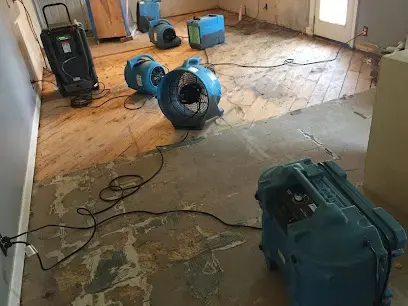
Concrete is porous and holds water longer than most people expect. Wet flooring comes off, and what sits on top of the slab is dried so it does not trap moisture against the surface.
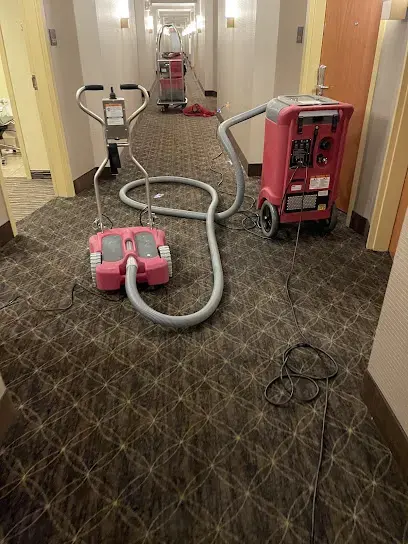
Air movers push dry air across the surface, dehumidifiers pull moisture out of the room, and drying mats can draw water from the concrete itself. Smyrna's humid subtropical air slows the process, so equipment runs until readings come down rather than for a set time.
The target is a reading within 2 to 4 points of a dry reference material. That is how the team knows the structure is dry, not just the surface.
- Flooring is lifted where readings show trapped water.
- Baseboards and the bottom of drywall are checked and opened only where needed.
- Equipment stays until the slab, subfloor and walls match the dry reference.
Flooring, cabinets and what often has to go
Carpet pad and laminate are rarely worth saving after a long leak. Hardwood can sometimes be dried in place if the water is caught early, and tile may survive when the slab below is dried properly.
Cabinet bases and baseboards that sat in water are opened and checked, because moisture hides behind them. The aim is to save what can be saved without leaving wet material behind.
A homeowner can help by moving small items out of the room and keeping a list of what was affected for the claim.
Rugs and furniture legs left on wet flooring can stain it, so lifting them early helps. Photos taken before anything is moved show the original condition of the room.
When a slab leak becomes an emergency
Some leaks are slow. Others are not.
If water is coming up through the floor, the main shutoff at the house or the meter should be closed until a plumber can look at it.
A running meter with no visible water, a sudden jump in the bill, or a warm floor spot are reasons to call the restoration team for an assessment of the slab leak water damage. That includes homes near Downtown Smyrna and Front Street and the newer subdivisions along Sam Ridley Parkway and Almaville Road.
The restoration team documents the water damage and dries the structure while the plumber handles the pipe. Two crews on two problems is faster than waiting for one to finish before the other starts.
Related services and nearby towns
A leak under the slab usually calls for both slab leak work and structural drying, because the pipe and the wet materials are two separate jobs.
The restoration team also serves the nearby towns, and the same steps apply there. Homes in Murfreesboro sit on the same Rutherford County limestone, so a hidden leak behaves much the same way.
Questions
How can a homeowner tell a slab leak from a surface spill?
A spill dries from the top and does not return. A slab leak keeps the floor warm or damp in the same spot, and the water meter keeps moving with everything off.
Does a slab leak always mean the concrete must be broken?
Not always. Meters and thermal imaging narrow the location first, and a plumber decides whether to open the slab or reroute the pipe.
Who repairs the pipe, and who dries the house?
A plumber repairs or reroutes the pipe. The restoration team extracts water, dries the slab, subfloor and walls, and documents the damage.
How does the team know the slab is dry?
Moisture readings are compared with a dry reference material, and drying continues until the structure reads within 2 to 4 points of it.
Can hardwood floors be saved after a slab leak?
Sometimes. If water is caught early and the slab below is dried properly, hardwood can often be dried in place; long leaks usually mean replacement.