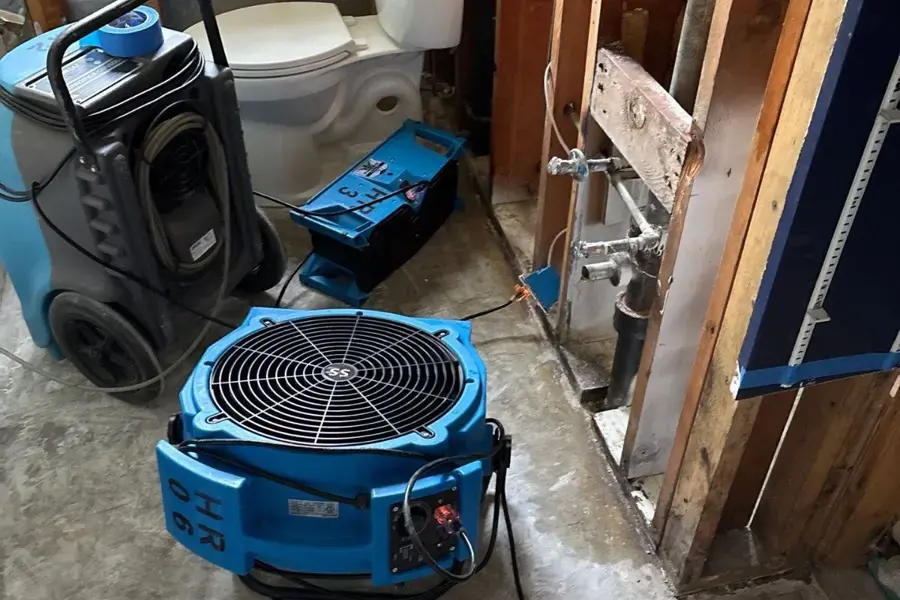
On March 27 to 28, 2021, flash flooding put up to three feet of water in Valley Center businesses and a church in Mount Juliet. The water went down, but the walls told a longer story.
Key takeaways
- The wet line on a wall is the lowest part of the problem, not the highest. Water keeps climbing inside drywall and insulation after the flood recedes.
- At Valley Center, up to three feet of water led businesses to replace wall board up to 4 feet from the floor, plus flooring.
- Moisture readings, not the eye, decide where to cut and what can be dried in place.
- Drywall, insulation and baseboard soaked by flood water are usually removed, while framing and concrete are dried.
- A commercial space needs a dry, documented wall before it can reopen or be rebuilt.
What happened at Valley Center in March 2021
Valley Center is a commercial center in Mount Juliet with restaurants and other businesses. During the March 27 to 28, 2021 flash flood, water entered storefronts and a church and stood up to three feet deep.
Afterward, businesses there replaced wall board up to 4 feet from the floor and replaced their flooring.
That one detail is a useful lesson. The water reached three feet, yet the repair went higher than the water line.
Why the repair went higher than the water
Wall materials pull water upward the way a paper towel pulls water from a glass. The visible stain is only where the water stopped being able to climb.
Behind it, the paper face of drywall and the gypsum core stay wet well above the mark.
Why flash floods leave a hard line
Creek water in a flash flood carries silt and debris. When it drains out of a building, it leaves a dirty line on the wall.
That line looks like the edge of the damage. It is not.
How wicking moves water up a wall
Wicking is the slow climb of water through porous material. Drywall, insulation, wood trim and the bottom plate of a wall all take part.
A wall holds water in several places at once, so the wet zone is bigger than a surface check suggests.
- Drywall pulls water into its paper face and gypsum core.
- Batt insulation soaks up water like a sponge and holds it against the framing.
- Baseboard and trim trap moisture where air cannot reach.
- The bottom plate and studs absorb water at the floor and release it slowly.
Why the wet line is lower than the real wet zone
The visible line shows where standing water sat. Moisture above that line cannot be seen, because it lives inside the wall.
A wall can look dry on the face while the cavity behind it stays wet. Paint, vinyl and wall covering make this worse, since they slow the way a wall dries toward the room.
Signs the wall is wetter than it looks
Several clues point to moisture above the line.
A restoration team confirms them with a meter instead of guessing.
- Paint that bubbles, peels or stains above the flood line.
- Baseboard that lifts or gaps away from the wall.
- A musty smell that returns after the room is aired out.
- Drywall that feels cool, soft or swollen when pressed.
Where the cavity hides water
Insulation and the base of the framing are the slowest parts to dry. A small opening cut near the floor lets the team read the cavity directly.
Readings, cut lines and what stays
Moisture meters and thermal imaging map the wet zone. The team reads the wall at several heights and follows the numbers up until they match a dry reference wall.
Where the wall stays wet, material comes out. Where it reads dry, it can stay.
- Drywall and insulation soaked by flood water are removed to a clean, dry height.
- Baseboard and wall covering are taken off so the wall can breathe.
- Studs, plates and concrete are cleaned and dried in place.
- Readings are repeated until the framing matches the dry reference.
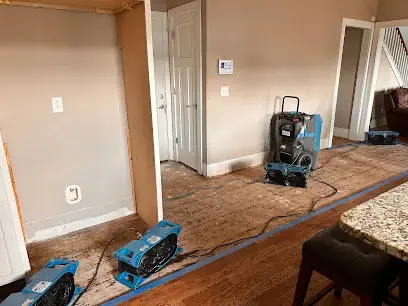
Drying a flooded commercial space
Valley Center and Providence Marketplace are retail centers, and a flooded storefront has a different clock than a home. A business cannot reopen with a wet wall, and a landlord and tenant both need the paperwork.
The commercial water damage team removes standing water, takes out wet material and sets drying equipment on a plan that keeps the space moving toward a rebuild.
Equipment and airflow
Air movers push dry air across wet surfaces, and dehumidifiers pull the moisture out of the air so it does not settle back into the walls.
Wall cavities are opened or vented so air can reach the framing.
Records for the owner and the insurer
Daily readings, photos and the drying log show what was wet, what was removed and when the space reached its goal.
That record supports the claim and tells the rebuild crew when it is safe to close walls.
What a property owner should do first
After a flash flood, speed matters more than anything else. Water that sits in a wall keeps climbing and keeps soaking the framing.
The structural drying team starts by finding the real wet zone, so no one tears out more than needed or leaves a wet wall behind.
- Photograph the water line and the damage before anything is moved.
- Turn off power to wet areas if it is safe to reach the panel.
- Do not paint or close a wall that has been wet.
- Ask for readings above the visible line, not only at it.
Why Mount Juliet water problems repeat
Mount Juliet sits between Old Hickory Lake and Percy Priest Lake, and a vice mayor once put it plainly: the city between two lakes has water problems.
Creeks such as Spring Creek and Stoner Creek, and a stormwater utility created in November 2022, reflect how often water is on the agenda here.
For homes on the Smyrna side of the area, the same drying method applies, and the structural drying page explains it for Smyrna homes.
Questions
Why do walls stay wet above the visible flood line?
Drywall, insulation and framing pull water upward by wicking. The stain shows where standing water stopped, while moisture keeps climbing inside the cavity.
How high did Valley Center businesses replace wall board after the 2021 flood?
Valley Center businesses replaced wall board up to 4 feet from the floor after up to three feet of water entered them on March 27 to 28, 2021.
Can flood soaked drywall be dried instead of replaced?
Usually it cannot. Drywall and insulation soaked by flood water are typically removed, while studs, plates and concrete are dried and checked.
What tells a restoration team where to cut?
Moisture meter readings taken at several heights. The team follows the readings upward until they match a dry reference wall.
Does a flooded business need drying records?
Yes. Daily readings, photos and a drying log document the loss for the owner, the landlord and the insurer, and show when the space is ready to rebuild.