Structural Drying and Dehumidification in Mount Juliet, TN
A floor that feels dry can still hold water in the framing and slab. The crew picks air movers, LGR dehumidifiers and desiccants by the class of loss and logs readings daily until the structure matches a dry reference.
(888) 849-5796Dry the Mount Juliet structure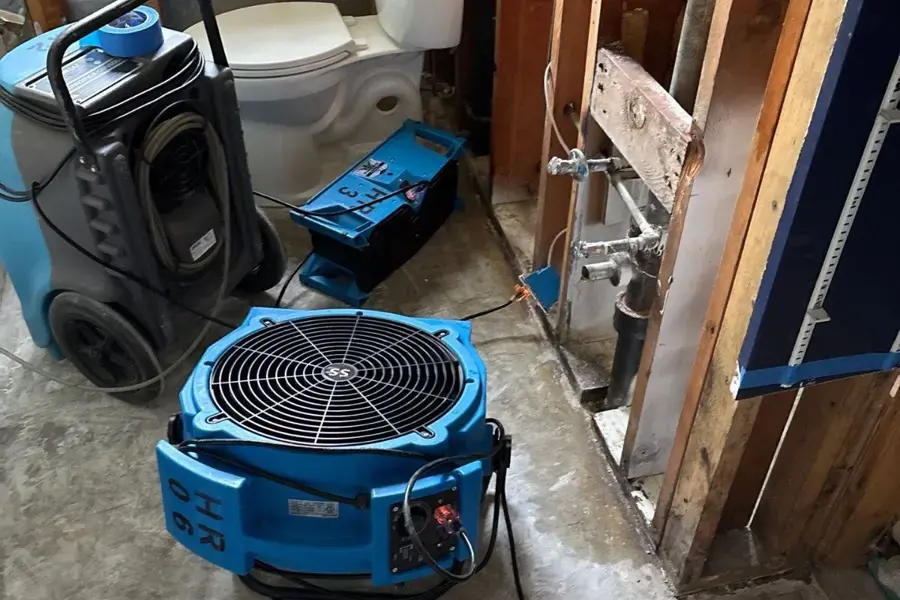
When flash flooding put up to three feet of water into Valley Center businesses in March 2021, owners later replaced wall board up to 4 feet from the floor. That reach, higher than the water itself, shows how far moisture climbs inside a structure.
First steps for structural drying and dehumidification in Mount Juliet
- 1
Stop the source
Make sure the water is off and the leak or opening is controlled.
- 2
Get standing water out
Extraction comes before any drying equipment.
- 3
Close the windows
Open windows let humid air back in, so keep them shut.
- 4
Leave equipment running
Do not switch machines off to save power; readings decide the finish.
What does structural drying and dehumidification cost in Mount Juliet, TN?
Plan on $1,000 to $10,000 for structural drying in Mount Juliet, TN. The loss class, the rooms involved, the materials and the monitoring days the readings call for set the figure.
One area, light materials
$1,000 to $3,000
- Air movers
- LGR dehumidifier
- Daily logs
Several rooms
$3,000 to $6,500
- Wall cavity drying
- Added equipment
- Psychrometric logs
Slab or hardwood
$6,500 to $10,000
- Desiccants and mats
- Extended monitoring
- Complete claim file
Ranges are typical, not a quote: category of water, square footage, material class and how fast drying started move the number most. Run the water damage cost calculator for a closer range.
How structural drying and dehumidification is handled in Mount Juliet
The tech who does the walkthrough maps moisture before any equipment goes down, so the drying plan matches what is actually wet. Equipment stays until the readings say dry, not until it looks dry.
- 01
Classify the loss
The crew rates the loss by class and maps wet materials.
- 02
Place the equipment
Equipment is sized to each room and its materials.
- 03
Monitor daily
The crew logs readings and adjusts the setup every day.
- 04
Reach the goal
Equipment comes out when readings match the dry reference.
Drying by calculation, not guesswork
The class of loss, the materials and the volume of each room pick the equipment, never a rule of thumb. Air movers push moisture off surfaces, LGR dehumidifiers pull it out of the air, and desiccants handle dense materials where refrigerant units struggle. The setup is adjusted as the readings change, and machines are moved as areas finish.
- A Class 1 to 4 rating of the loss.
- Air movers and dehumidifiers matched to room volume.
- Daily psychrometric logs for air and materials.
Proving the structure is dry
Each day the crew writes down temperature, humidity and moisture content in framing, subfloor, drywall and slab, then compares them with a dry reference from an unaffected area. Equipment comes out only when the two agree. See water extraction for the step before drying and slab leak water damage for concrete.
Why humidity matters here
Humid air slows evaporation wherever it shows up, and Mount Juliet sits between Old Hickory Lake and Percy Priest Lake. In warm weather dehumidifiers do most of the work, and keeping windows closed helps the drying finish. Wet carpet pad, insulation and swollen wall board that cannot reach a dry reading are removed so the rest of the structure can finish drying.
Structural drying and dehumidification across Mount Juliet and nearby towns
Drying projects cover all of ZIP 37122, including Providence, Del Webb Lake Providence, Valley Center, Belinda City, Jackson Hills and the neighborhoods along Lebanon Road.
The same service nearby: structural drying and dehumidification in Smyrna, La Vergne, Nolensville.
Water damage restoration in Mount Juliet · every town covered
Related water damage services in Mount Juliet
Structural Drying and Dehumidification questions in Mount Juliet, TN
What does Class 1 to 4 mean?
It rates how much water a loss involved and how absorbent the materials are, from small and low-porosity to deep and dense like slab and hardwood.
Are dehumidifiers more important than fans?
Fans move moisture off surfaces, but only a dehumidifier takes it out of the air so the materials keep releasing water.
How is a dry reference chosen?
From the same materials in an unaffected part of the building, so the target reflects how those materials read when they are dry.
Why is the equipment still running?
Surface dry is not structure dry. Framing, subfloor and concrete hold moisture long after the top looks fine.
Can the equipment be turned off overnight?
No. Stopping the machines lets moisture settle back into materials and extends the job.
Will insurance cover the drying?
Drying is normally part of a covered water loss, so the daily logs matter. Your insurer determines what applies.
Walls or floors still wet in your Mount Juliet home? Get the drying started.
Hidden moisture in framing, subfloor and slab keeps doing damage until drying reaches a verified reading.
Smyrna, TN · Rutherford County · open 24/7