Structural Drying in Nolensville, TN
A surface that feels dry can still hold water in the framing, subfloor and wall cavities. The Nolensville crew maps the moisture, matches the equipment to the loss and keeps drying until the numbers settle.
(888) 849-5796Start the Nolensville drying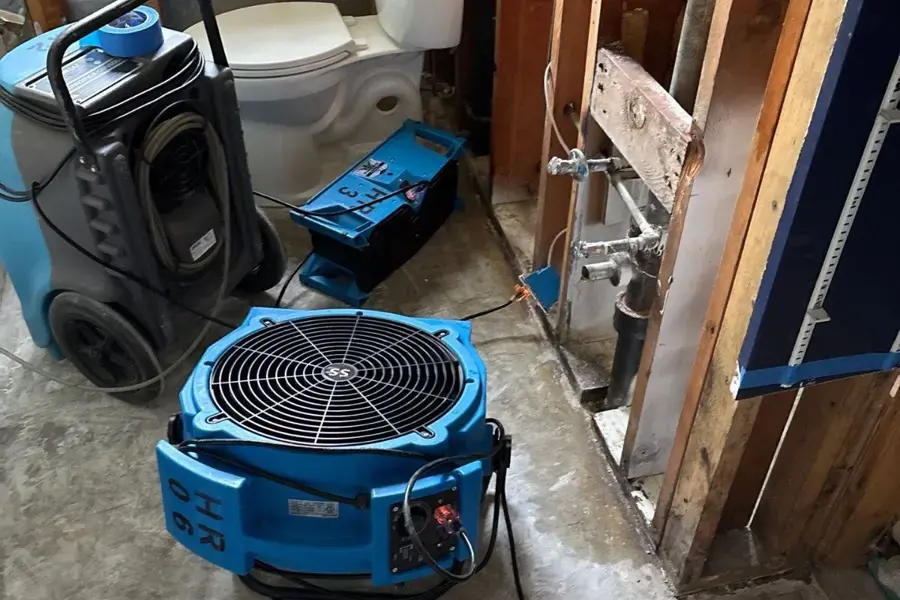
Large newer homes hold a lot of drywall, subfloor and framing, and each of them can stay wet after the visible water is gone. Moisture mapping comes before the rebuild so nothing is closed up damp, because a wall sealed over a wet cavity can hide the problem for months. The same applies to flooring laid over a subfloor that has not been tested.
First steps for structural drying and dehumidification in Nolensville
- 1
Stop the source
Make sure no water is still entering.
- 2
Leave wet materials in place
Do not tear out until the moisture is mapped.
- 3
Keep the house closed
Open windows let humid air in and slow drying.
- 4
Record what you see
Photograph the wet areas and note when the water started.
What does structural drying and dehumidification cost in Nolensville, TN?
Structural drying in Nolensville, TN typically runs $1,000 to $10,000. Loss class, the number of rooms, the type of materials and how many days the readings keep equipment running drive the figure.
Light loss, single area
$1,000 to $3,000
- Moisture mapping
- Air movers
- Daily readings log
Several rooms
$3,000 to $6,500
- LGR dehumidifiers
- Daily logs
- Wall cavity drying
Dense materials
$6,500 to $10,000
- Desiccant drying
- Extended monitoring
- Full claim paperwork
Ranges are typical, not a quote: category of water, square footage, material class and how fast drying started move the number most. Run the water damage cost calculator for a closer range.
How structural drying and dehumidification is handled in Nolensville
The tech who does the walkthrough maps moisture before any equipment goes down, so the drying plan matches what is actually wet. Equipment stays until the readings say dry, not until it looks dry.
- 01
Map the moisture
Meters and a thermal camera locate every wet material.
- 02
Size the equipment
Air movers and dehumidifiers are matched to the class of the loss.
- 03
Monitor daily
Temperature, humidity and material readings are recorded each visit.
- 04
Release on the numbers
Machines leave once the readings settle at a dry reference.
Why drying is calculated, not guessed
Machines are placed according to the loss class, the cubic footage of the space and what the water soaked. Too little airflow leaves moisture behind, while too much wastes power and can stress wood. Psychrometric readings of temperature and humidity steer the adjustments.
- Class 1 and 2 cover small losses in porous materials
- Class 3 covers soaked ceilings and walls
- Class 4 covers slabs and other dense materials
How the crew proves it is dry
Every wet material is measured on the first visit and again each day. Machines stay until readings sit close to a dry reference, usually within 2 to 4 points. The slab, the framing and the drywall are checked, not just the surface. If a reading stalls, the crew moves the equipment or changes the airflow instead of waiting. Every visit leaves a dated record that shows the trend toward dry.
Why the air matters
Warm, humid conditions slow drying, so a dehumidifier does much of the work. A slab leak water damage is a good example of a Class 4 job where the dehumidifier does the heavy lifting, and water extraction is the stage that comes before any of it.
Structural drying and dehumidification across Nolensville and nearby towns
Structural drying crews cover ZIP 37135 and neighborhoods including Bent Creek, Winterset Woods, Silver Stream and Sunset Farms, plus Nolensville Road properties and nearby homes.
The same service nearby: structural drying and dehumidification in Smyrna, Brentwood, La Vergne.
Water damage restoration in Nolensville · every town covered
Related water damage services in Nolensville
Structural Drying and Dehumidification questions in Nolensville, TN
What is Class 1, 2, 3 and 4?
They describe how much water the materials took on and how fast it will leave, from small and porous losses to dense, saturated materials.
Why not just open the windows?
Outdoor air can be humid, which slows drying. Controlled airflow with dehumidifiers is faster and more predictable.
How do you know when it is dry?
Readings are compared with a dry reference, and equipment stays until they match.
What does desiccant drying do?
Desiccant dehumidifiers pull water from dense materials like concrete that conventional units dry slowly.
Does drying replace tear-out?
Not always. Materials that can dry in place are saved, and only saturated or contaminated ones are removed, which keeps the rebuild smaller.
Need a structure dried in Nolensville? Start with the readings.
Hidden moisture stays in framing and subfloor until equipment is sized and the readings confirm dry.
Smyrna, TN · Rutherford County · open 24/7