Structural Drying in Brentwood, TN
Water that soaks framing, subfloor and drywall does not leave on its own. The drying team maps the moisture, sizes the equipment to the loss and reads the materials daily until they reach the dry goal.
(888) 849-5796Start the drying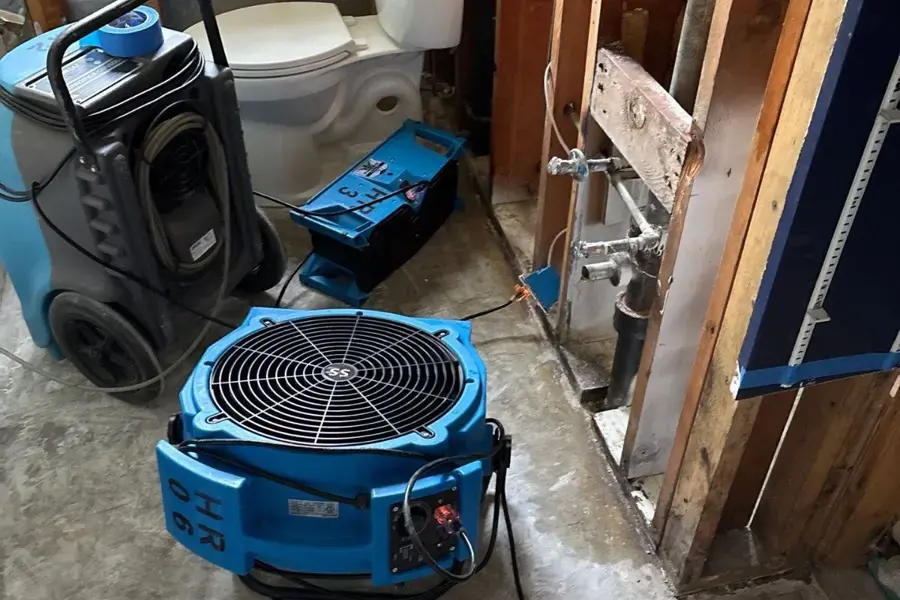
Wet drywall and subfloors in large homes need moisture mapping before anything is rebuilt. Surfaces can feel dry while framing behind them still holds water, which is how hidden damage ends up under new paint and flooring.
First steps for structural drying and dehumidification in Brentwood
- 1
Stop the leak
Fix or shut off whatever is releasing water.
- 2
Remove standing water
Water must be extracted before drying starts.
- 3
Keep windows shut
Humid outside air slows drying in warm weather.
- 4
Let machines finish
Stopping early leaves moisture inside the framing.
What does structural drying and dehumidification cost in Brentwood, TN?
Structural drying in Brentwood, TN usually runs $1,000 to $10,000, set by the class of loss, the number of wet rooms, the materials and how many days of monitoring the readings require.
Class 1 or 2, one area
$1,000 to $3,000
- Air movers
- One LGR dehumidifier
- Daily readings
Class 3, several rooms
$3,000 to $6,500
- Wall cavity drying
- More machines
- Climate logs
Class 4, slab or hardwood
$6,500 to $10,000
- Desiccants and mats
- Long monitoring
- Full paperwork
Ranges are typical, not a quote: category of water, square footage, material class and how fast drying started move the number most. Run the water damage cost calculator for a closer range.
How structural drying and dehumidification is handled in Brentwood
The tech who does the walkthrough maps moisture before any equipment goes down, so the drying plan matches what is actually wet. Equipment stays until the readings say dry, not until it looks dry.
- 01
Classify
The water source and materials set the class and category.
- 02
Place equipment
Air movers and dehumidifiers are sized to room volume.
- 03
Monitor daily
Readings direct equipment moves and removals.
- 04
Reach the goal
Drying ends once materials match a dry reference.
Drying follows a plan
The class of loss and the materials set the equipment. Class 1 and 2 jobs, such as a wet carpet or a wall base, need less than Class 3 jobs where water reached the ceiling, or Class 4 jobs involving slabs and hardwood. LGR dehumidifiers handle most of it, with desiccants for dense materials. A bigger floor plan simply means more rooms to map and more machines to place, and the crew documents each room's equipment count so the file matches what ran.
Proof, not appearance
Each day the crew records temperature, humidity and moisture content, then moves or removes machines as materials come down. The loss is dry when framing, subfloor and drywall sit within 2 to 4 points of a dry reference, and the logs go into the claim file.
- Daily psychrometric readings.
- Moisture content of each wet material.
- Equipment counts and placement.
Weather and humidity
Warm, humid air slows drying, so dehumidifiers matter more than fans in summer, and windows stay closed while equipment runs. Open walls and floors dry faster than closed ones, which is why selective openings, cut where meters point, shorten the job instead of lengthening it. Related jobs include slab leak water damage and water extraction.
Structural drying and dehumidification across Brentwood and nearby towns
The drying team covers ZIP 37027 and ZIP 37024, including Annandale, Whetstone, Raintree Forest and Southern Woods, and homes close to Primm Historic Park and Tower Park.
The same service nearby: structural drying and dehumidification in Smyrna, Nolensville, La Vergne.
Related water damage services in Brentwood
Structural Drying and Dehumidification questions in Brentwood, TN
How can I tell a wall is truly dry?
By a meter reading, not by looks. Materials must land within 2 to 4 points of a dry reference sample.
Why does drying take several days?
Water leaves dense materials slowly, and equipment has to keep the air dry enough to draw it out.
Can fans alone dry a house?
No. Fans move air, while dehumidifiers remove the moisture, and together they dry the framing.
Does drying raise my power use?
Somewhat, since equipment runs for days. The readings log supports that cost in the claim.
What do the loss classes mean?
Class 1 to 4 describe how much water the materials absorbed, from little in Class 1 to dense materials in Class 4.
When should drying start?
As soon as the source is stopped and standing water is out, since every wet day raises the chance of mold.
Need a house dried out? Start in Brentwood.
Moisture stays in framing and subfloor until equipment draws it out and the readings agree.
Smyrna, TN · Rutherford County · open 24/7