Slab Leak Water Damage in Brentwood, TN
A cracked supply pipe under a concrete floor soaks the layers above long before a stain appears. The drying team follows the moisture with meters, opens only the spots that read wet and keeps equipment running until the concrete is back to normal.
(888) 849-5796Get the Brentwood slab dried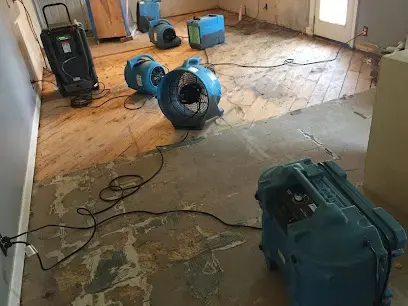
Brentwood has many large single-family homes, and in a house built on a slab, a leaking pipe below the floor can run for weeks before anyone notices. A hot spot on the floor or a meter that refuses to rest usually comes first, and the pipe can be anywhere under the house, not only near the leak.
First steps for slab leak water damage in Brentwood
- 1
Turn off the supply
Close the main valve and leave it closed until a plumber repairs the pipe.
- 2
Test the meter
Make sure every fixture is off, then see whether the dial keeps moving. Take a picture.
- 3
Record the floor
Photograph damp carpet, swollen trim and lifting planks before anything is touched.
- 4
Wait on the fans
Drying equipment goes in after the wet area is charted, not before.
What does slab leak water damage cost in Brentwood, TN?
In Brentwood, TN, slab leak drying typically costs $2,000 to $12,000, separate from the plumbing repair, and depends on how far the water traveled, what flooring sits above and how many weeks the pipe leaked.
Early catch, single room
$2,000 to $4,000
- Soaked pad removed
- Slab and wall bases dried
- Daily meter checks
Multi-room spread
$4,000 to $8,000
- Planks pulled up
- Drywall cut at the floor
- Desiccant units
Weeks-long leak
$8,000 to $12,000
- Flooring in many rooms
- Prolonged slab drying
- Full documentation
Ranges are typical, not a quote: category of water, square footage, material class and how fast drying started move the number most. Run the water damage cost calculator for a closer range.
How slab leak water damage is handled in Brentwood
The tech who does the walkthrough maps moisture before any equipment goes down, so the drying plan matches what is actually wet. Equipment stays until the readings say dry, not until it looks dry.
- 01
Trace
Meters and thermal imaging follow the moisture away from the failed pipe.
- 02
Open selectively
Only pad, planks and wall bases that read wet are removed.
- 03
Pull moisture from concrete
Dehumidifiers and air movers draw water out of the slab and framing.
- 04
Sign off on dry
New flooring goes in once the concrete reads like a dry sample.
Clues that the leak is underneath
The water bill and the meter often tell the story before the floor does. If the dial turns while every fixture is off, the bill jumps with no change in habits or one tile feels warm, the leak is probably in or beneath the concrete. Soon after, baseboards swell, carpet stays damp and wood planks lift at the joints.
- A single warm area on the floor.
- Carpet that never fully dries.
- A dial moving in a quiet house.
Add up the signs with the slab leak warning sign check.
Who handles which part
The plumber's job is the pipe: locating the failure and fixing or rerouting it. The restoration crew handles the water it released. That means mapping the wet footprint with meters and thermal imaging, hauling out soaked pad, lifting planks that trap water against the concrete and cutting wallboard only where the base reads wet.
Drying concrete takes patience
Concrete soaks up water and gives it back slowly, so most slab leaks fall into Class 4 and call for dehumidification built for dense materials. Desiccant or LGR units work next to air movers aimed at the exposed floor. Daily readings from the slab, plates and drywall decide when it ends, and no new flooring goes down until the numbers are dry, because sealing damp concrete under it traps the moisture. The structural drying page covers the equipment.
Slab leak water damage across Brentwood and nearby towns
The Brentwood drying team covers ZIPs 37027 and 37024, including Witherspoon, Annandale, Rosebrooke and Brenthaven, along with homes on Edmondson Pike and the streets around Crockett Park.
The same service nearby: slab leak water damage in Smyrna, Nolensville, La Vergne.
Related water damage services in Brentwood
Slab Leak Water Damage questions in Brentwood, TN
How do the readings prove the slab is dry?
The crew compares slab, plate and drywall readings with the same materials in a dry part of the house. Equipment leaves once they fall within 2 to 4 points of that reference, never earlier.
Will the whole floor be torn out?
Usually not. Tile often stays because concrete can release moisture through edges and grout joints, but pad comes out and planks lift wherever water is trapped below.
Does the pipe need fixing before drying starts?
Yes, the water has to stop first. After a plumber repairs or reroutes it, drying equipment can go in on the same visit.
How can I tell it is a slab leak and not a spill?
A moving meter with everything off, one warm floor spot and carpet that stays damp for no visible reason all suggest a leak below.
Is slab leak damage covered by insurance?
Many policies split the water damage from the pipe repair. Which part applies is up to your own insurer, so hold on to the moisture map, readings and pictures.
How fast can mold appear?
Soaked pad, flooring and wall bases can grow mold inside two days, so drying starts at once.
Water beneath a Brentwood floor? Get the slab dried.
Until the pipe is repaired and the concrete reads dry, moisture keeps traveling beneath the flooring.
Smyrna, TN · Rutherford County · open 24/7